
Growing up, I always heard the Elders say it: prayers up, tobacco down. I wondered for a long time what that actually meant. I knew our people used tobacco, but I pictured it wrong for years. I thought it was loose tobacco, packed into a pipe and smoked. Nobody ever sat me down and taught me about it directly. Three of my grandparents smoked, and what I have instead of a lesson is a memory: my great-grandfather, my grandmother’s father, filling his pipe and lighting it. He was blind by then, and my grandmother was the one who brought him his tobacco. It’s a good smell, in my memory.
As a teenager I was a dancer. My grandmother made me a blanket, and I danced with our songs and our stories at community potlatches. When I was about fourteen or fifteen, I went to Vancouver for a totem pole raising and danced there too. At potlatches, the stories always came out, stories about people fishing, stories told at a memorial about a man who had passed, what he used to fish, what his family was like. We smoked our own salmon. I never had to buy fish growing up.
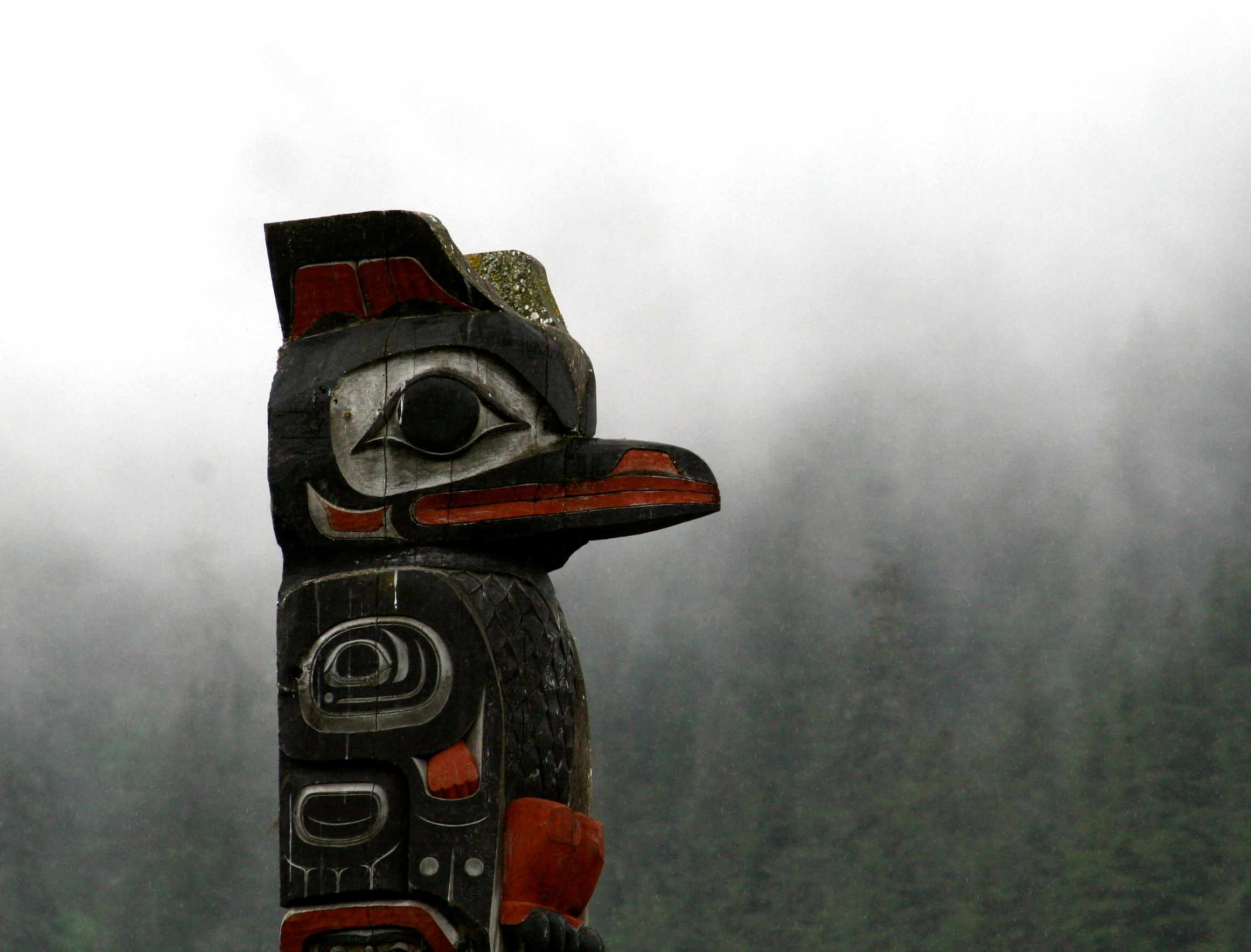
My favorite stories were about the eagle and the raven, because that’s how our families are divided. I’m from the eagle clan, so on my blanket I can wear an eagle, a hummingbird, a skate, a blackbird, crests that belong to us. The raven side wears their own Northwest Coast crests, fish, killer whales, their own sub-crests. That’s how you can look at someone’s blanket and know their family, know which longhouse they come from. We used to have longhouses and totem poles all through our villages, until the government made us cut them down. They called them evil.
My kids know these stories. My sister knows them, everyone in the family does, we bring them up at dinner, at dances, whenever a potlatch happens. If it’s the eagle clan holding the potlatch, the raven clan serves the food and the coffee, and the other way around when it’s theirs. My son has been on a canoe journey from Haida Gwaii all the way to Bella Bella. He carries it forward the way I did.
People ask if I’m afraid the stories will die out. I’m not. They’ll stay in us. If you’re somewhere and someone starts talking about our culture, our chief, what he did, who lived in the village, you lean in, you want to know. It’s written down in us the way it’s written down in the old accounts, even through everything that happened. My own grandmother believed in the church, went every week, even after the missionaries came for her children. My uncles were twins, and the government took them away to a school because someone decided it would be better for them. My grandmother was alone in the house, her husband was already sick with lung cancer and there was nothing she could do. They didn’t even need to break in. The doors weren’t locked.
I think about how it must have felt to watch our totem poles cut down and burned, told they were evil, told to be ashamed. That’s why I tell my children: don’t let the stories burn the way the totem poles did. Pass them down, exactly as they were given to you, so we don’t lose them, and so we don’t make the same mistakes again.